
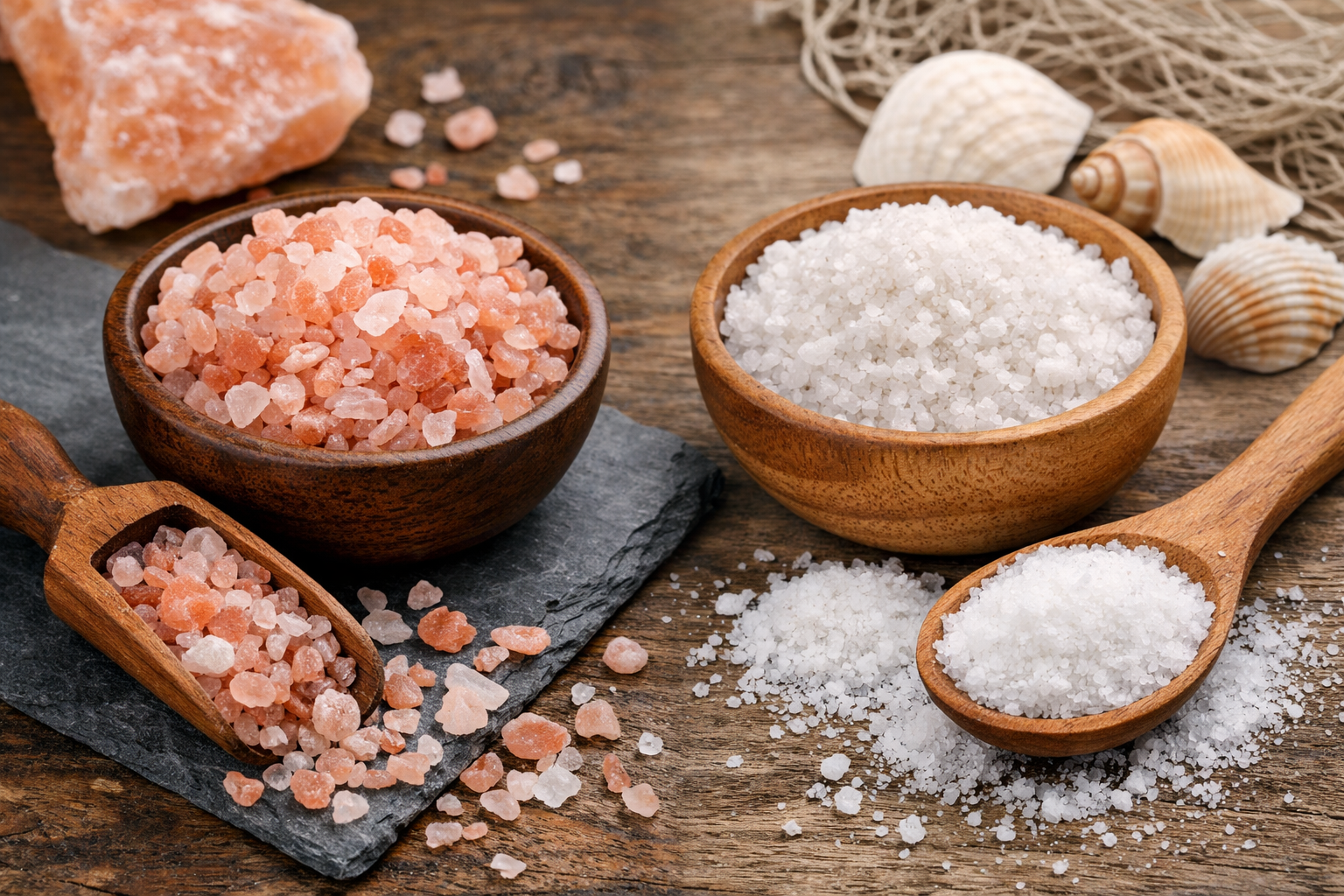
Sodium has a bad reputation. Decades of public health messaging have trained people to see salt as something to avoid — linked to blood pressure, heart disease, water retention. For the general sedentary population managing genuine health risk, that guidance has its place.
For anyone training hard and sweating regularly, it is often the wrong advice entirely.
Here is what most people training seriously get wrong about salt.
1. WHY SODIUM MATTERS IN THE FIRST PLACE
Sodium is not a dietary villain. It is an essential electrolyte responsible for regulating fluid balance, supporting nerve transmission, and enabling muscle contraction — including the muscle contractions involved in every single rep you perform.
Sodium works alongside potassium to maintain the electrical gradient across cell membranes that allows nerves to fire and muscles to contract. Without adequate sodium, that system does not function properly. This is not a minor supporting role — it is fundamental to how your body performs physical work.
2. WHAT TRAINING DOES TO YOUR SODIUM LEVELS
Sweat is not just water. It carries a meaningful sodium loss with it — and the harder and longer you train, particularly in heat or with high sweat rates, the more you lose.
Sweat sodium concentration varies significantly between individuals, but a serious training session can result in the loss of one to two grams of sodium or more, depending on intensity, duration, and how much you naturally sweat. Do that daily, week after week, on a diet designed around general low-sodium public health guidance, and you are running a consistent deficit that generic dietary advice was never designed to account for.
The public health guidance on sodium was built for a population that is, on average, sedentary. It was not built for someone training five or six times a week and sweating through sessions regularly.
3. WHAT LOW SODIUM ACTUALLY DOES TO PERFORMANCE
Inadequate sodium — particularly for those training hard and sweating heavily — does not just show up as thirst. It shows up as measurable performance decline.
Reduced blood volume, since sodium is directly tied to how much fluid your body retains and circulates. Lower blood volume means reduced delivery of oxygen and nutrients to working muscle.
Muscle cramping, particularly in longer or hotter sessions, is strongly associated with sodium and electrolyte depletion, not simply dehydration from water loss alone.
Fatigue and reduced endurance capacity, as fluid and electrolyte balance directly affects cardiovascular efficiency during sustained effort.
Impaired recovery, since fluid balance plays a role in nutrient transport and the physiological processes involved in repair after training.
None of this is theoretical. It is the practical, felt experience of someone under-fuelling a system that depends on sodium to function under load.
4. WHO NEEDS TO PAY THE MOST ATTENTION
Sodium needs are not universal, and this is not a blanket instruction to load up regardless of circumstance. But certain groups should be paying closer attention than generic guidance suggests:
Anyone training in heat or humidity, where sweat rates and sodium loss increase significantly.
Anyone with naturally high sweat rates — some people simply lose more sodium through sweat than others, regardless of conditions.
Endurance athletes and anyone training for extended durations, where cumulative sodium loss over a long session becomes significant.
Anyone following a low-carbohydrate or ketogenic approach, where the body naturally excretes more sodium through the kidneys, independent of sweat loss entirely.
Anyone training multiple times per day, compounding sodium loss across sessions without adequate replacement between them.
If you fall into any of these categories and you are following standard low-sodium dietary advice, you may well be underfuelling one of the most basic physiological requirements for performance.
5. HOW TO ACTUALLY APPROACH IT
This is not a licence to add salt indiscriminately to everything. It is a case for matching sodium intake to actual physical demand rather than defaulting to generic public health targets designed for an inactive population.
Salt food to taste rather than deliberately restricting it, particularly around training days.
Pay attention to sweat rate and adjust accordingly. Someone who finishes a session visibly caked in dried sweat is losing considerably more sodium than someone who barely sweats.
Consider a proper electrolyte formula around longer or harder sessions, particularly in heat, rather than relying on water alone. Water without electrolytes can actually dilute existing sodium levels further during heavy sweat loss.
Watch for the practical signs — cramping, unusual fatigue during training, or persistent thirst despite adequate water intake — as signals that sodium and electrolyte intake may be falling short.
6. WHERE PROPER HYDRATION SUPPORT FITS
Water alone does not replace what is lost through sweat during hard training. Proper hydration support — one that actually contains meaningful electrolyte content, not just flavoured water — fills that gap directly.
If you are training hard, sweating through sessions, and not specifically addressing sodium and electrolyte replacement, it is worth looking at.
Browse Hydration & Electrolyte Support →
CONCLUSION
Salt is not the enemy for anyone training seriously. It is a fundamental performance nutrient — and generic low-sodium advice built for a sedentary population is often the wrong guidance entirely for someone sweating through hard sessions regularly.
Stop fearing sodium. Start matching your intake to what your training actually demands.
That is the standard.
— RED SUPPS