
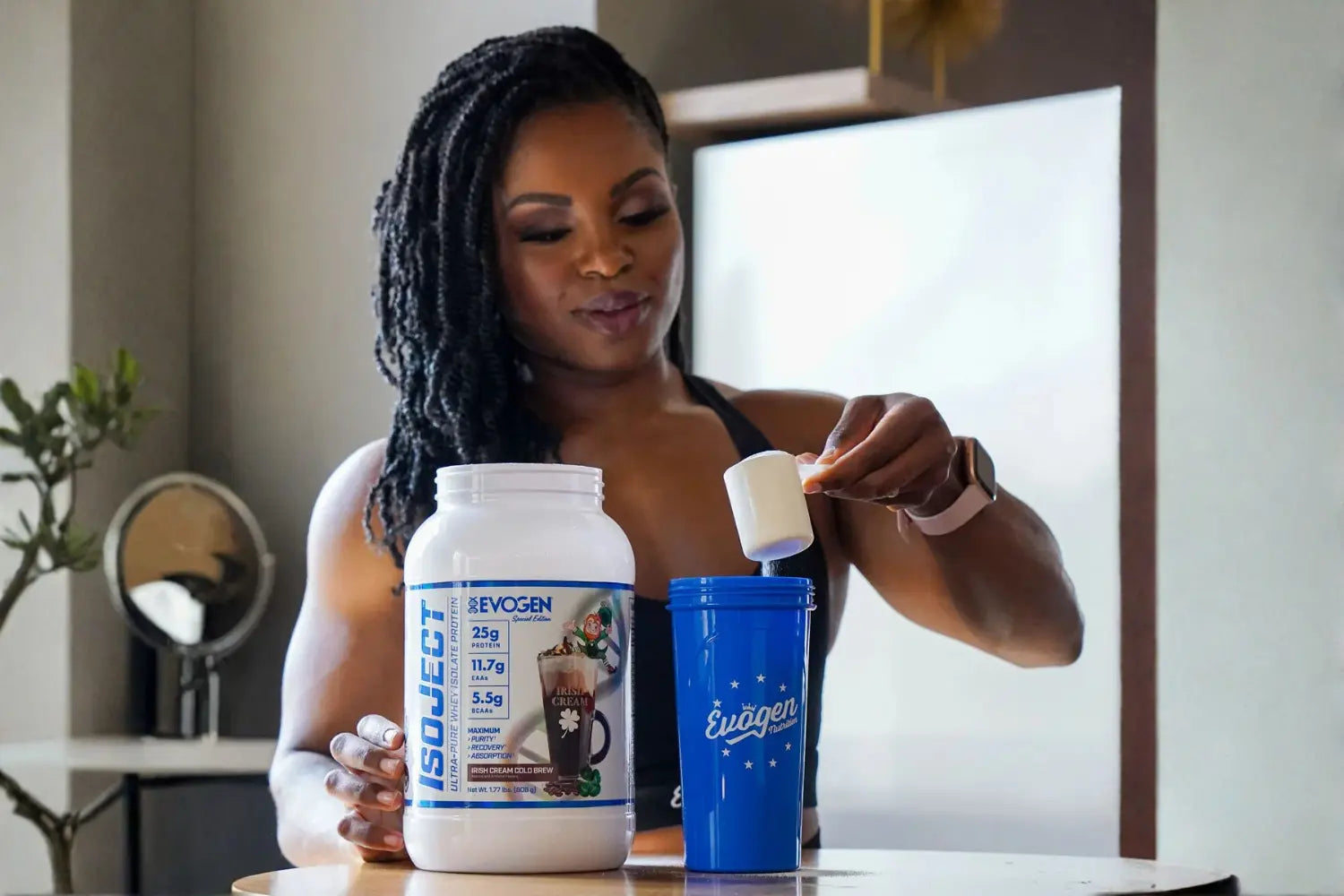
There is a question that comes up constantly in training circles. Do you need to eat protein immediately after training, or does it not matter as long as you hit your daily total?
The answer is more straightforward than most people make it. And understanding it will either simplify your routine or fix something that has been holding you back.
Here is the full breakdown.
1. THE ANABOLIC WINDOW — WHAT IT ACTUALLY IS
For years, the fitness industry sold the idea of a 30-minute anabolic window. Miss it and your session was wasted. Protein shake in hand before you even left the gym floor.
That idea is not entirely wrong — but it has been dramatically overstated.
Muscle protein synthesis — the process by which your body repairs and builds muscle tissue — does elevate after training. And protein consumed around that window does contribute to that process. But the window is not 30 minutes. Research consistently shows it is closer to several hours. Your body does not switch off the moment you leave the gym.
For most people training in a fed state — meaning they ate a meal containing protein two to three hours before training — the post-workout window matters far less than the industry would have you believe.
2. TOTAL DAILY PROTEIN IS THE FOUNDATION
This is the part that actually moves the needle.
If you are not hitting adequate total daily protein, no amount of timing optimisation will fix it. You cannot time your way out of a protein deficit. The raw material simply is not there.
The target: 1.6 to 2.2 grams of protein per kilogram of bodyweight per day. For a serious lifter, erring toward the higher end is well-supported. Hit that number consistently — every day, not most days — and you have done 90% of the work.
Total intake is the variable that matters most. Timing is a refinement on top of a solid foundation. It is not a substitute for one.
3. SO DOES TIMING MATTER AT ALL?
Yes — but less than you think, and only once the basics are covered.
Here is where it does make a practical difference:
Training fasted. If you have not eaten for several hours before training, post-workout protein becomes significantly more important. There is no recent meal to draw from. In this scenario, getting protein in within an hour of finishing makes sense.
Multiple training sessions. Athletes training twice a day or with very short recovery windows between sessions benefit more from strategic timing. The faster you can initiate recovery, the better positioned you are for the next session.
Distribution across the day. This is the timing factor most people overlook. Rather than obsessing over the post-workout window, focus on spreading protein intake evenly across three to four meals throughout the day. Research suggests each meal should contain a minimum of 20 to 40 grams of protein to meaningfully stimulate muscle protein synthesis. Dumping most of your daily intake into one or two meals is less effective than distributing it consistently.
Before sleep. Slow-digesting protein — casein in particular — consumed before bed has solid evidence behind it for supporting overnight muscle protein synthesis. If your pre-sleep meal is low in protein, you are leaving recovery gains on the table during the longest fasting window of your day.
4. THE PRACTICAL TAKEAWAY
Stop obsessing over the exact post-workout window. Start here instead:
Hit your daily protein target. Every day. Non-negotiable.
Spread it across three to four meals. Each meal should contain at least 20 to 40 grams.
If you train fasted, get protein in soon after. If you trained in a fed state, relax — you have time.
Consider a protein source before bed. It does not need to be complicated.
That is it. No stopwatch required.
5. WHERE SUPPLEMENTATION FITS
Whole food should be your primary protein source. But consistently hitting 160 to 200 grams of protein per day through food alone is genuinely difficult for most people — which is where a quality protein supplement earns its place.
Not as a replacement. As a practical tool to close the gap between what you are eating and what you actually need.
If you are not already supplementing protein, or you are looking to switch to something cleaner, the RED SUPPS protein range covers the full spectrum — whey isolate, concentrate, blends, and more.
Browse the Protein Collection →
CONCLUSION
Protein timing is real. But it is a finishing touch, not a foundation. Get your total daily intake right, distribute it sensibly across the day, and the post-workout window takes care of itself.
The basics done properly beat any advanced strategy every single time.
That is the standard.
— RED SUPPS